 By Admin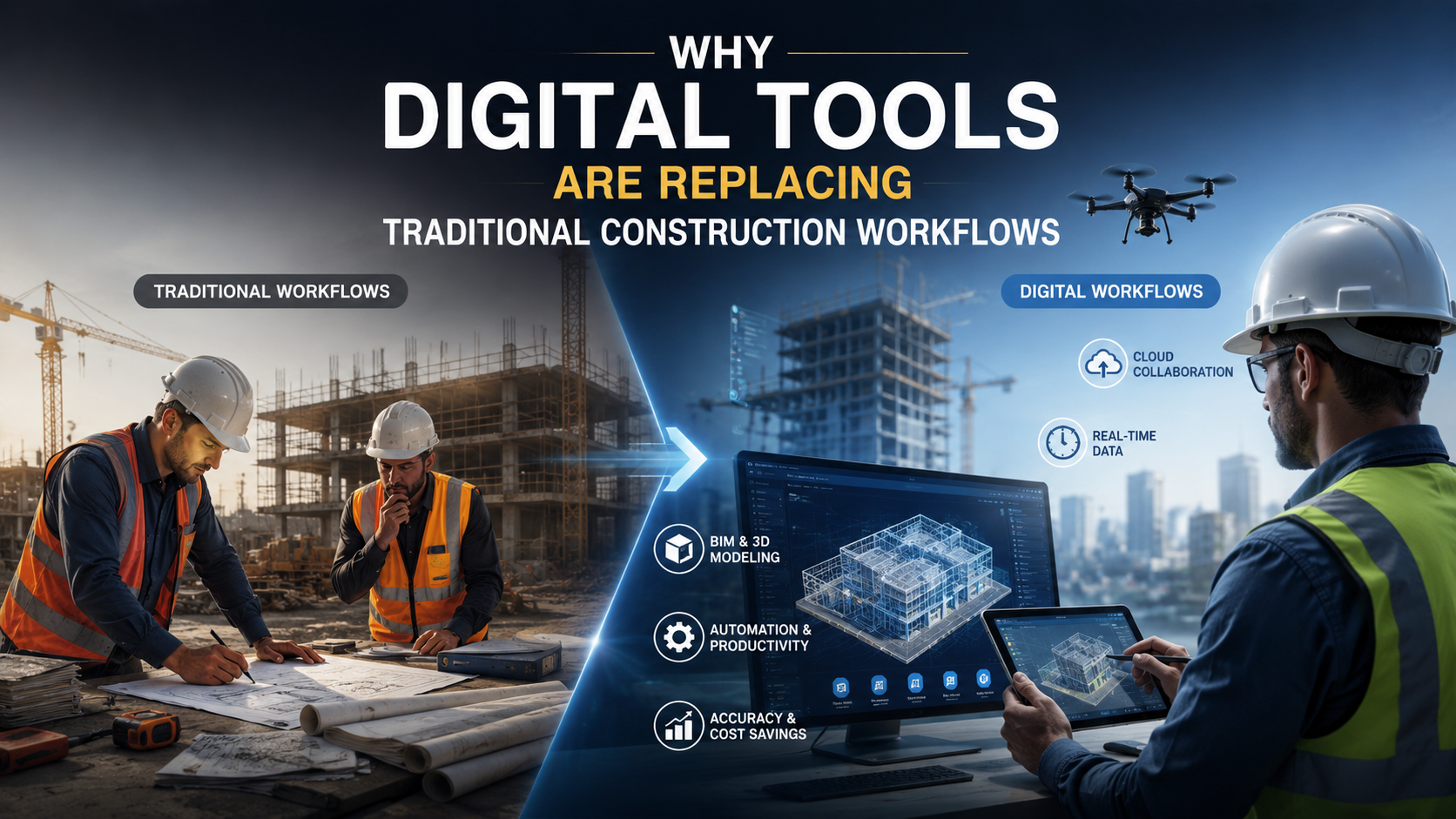
Construction has always been an industry built on precision, coordination, and timing. For decades, teams relied on manual processes—paper-based plans, spreadsheets, and fragmented communication—to manage projects. While these methods worked in the past, the complexity and scale of modern construction projects have exposed their limitations.
Today, digital tools are not just improving workflows—they are replacing traditional systems altogether.
The Limits of Traditional Workflows
Manual construction workflows often depend on disconnected systems. Project updates are shared through emails, documents are stored across multiple locations, and site teams rely on outdated drawings. This creates gaps in communication and increases the chances of errors.
A small mistake in estimation, scheduling, or documentation can quickly escalate into delays, cost overruns, or rework. As projects grow larger and more complex, these inefficiencies become harder to manage.
The Shift Toward Real-Time Visibility
One of the biggest advantages of digital tools is real-time access to information. Instead of waiting for updates or relying on static reports, project managers and field teams can view progress as it happens.
This level of visibility changes how decisions are made. Teams can respond to issues immediately, adjust timelines, and keep projects on track without unnecessary delays. Real-time data also improves accountability, as everyone works from the same source of truth.
Improving Accuracy Across the Project Lifecycle
Construction projects involve multiple stages—from estimation and planning to execution and delivery. In traditional workflows, each stage often operates in isolation, increasing the risk of inconsistencies.
Digital tools bring these stages together. Estimation data connects with budgeting, schedules align with resource allocation, and updates flow seamlessly between teams. This integration reduces duplication of work and improves overall accuracy.
In many cases, solutions like Sorba Construction Software are helping contractors centralize their operations, making it easier to manage estimates, track costs, and maintain consistency across projects.
Better Collaboration Between Teams
Construction is inherently collaborative. Architects, engineers, contractors, and subcontractors all need to stay aligned. Traditional workflows struggle to support this level of coordination, especially when teams are distributed across locations.
Digital platforms enable seamless collaboration. Documents can be shared instantly, updates are synchronized, and communication becomes more structured. Field teams and office staff no longer operate in silos—they work as part of a connected system.
This not only improves efficiency but also reduces misunderstandings that often lead to project delays.
Reducing Risk and Increasing Predictability
Risk management is a critical part of construction. Delays, budget overruns, and compliance issues can significantly impact project outcomes. Traditional workflows make it difficult to identify risks early, as data is often incomplete or outdated.
Digital tools provide better insights through data tracking and reporting. Project managers can monitor performance, identify trends, and address potential issues before they escalate. This level of predictability allows teams to plan more effectively and deliver projects with greater confidence.
Adapting to Industry Expectations
The construction industry is evolving. Clients expect faster delivery, greater transparency, and higher quality outcomes. Meeting these expectations requires more than incremental improvements—it demands a shift in how projects are managed.
Digital tools are enabling this shift by creating more efficient, data-driven workflows. Companies that adopt these systems are better positioned to compete, while those relying on traditional methods risk falling behind.
The Way Forward
The move from traditional to digital workflows is not just a trend—it is a response to the growing demands of modern construction. As projects become more complex, the need for integrated systems, real-time visibility, and accurate data will only increase.
Organizations that invest in digital tools are not just improving their processes; they are building a foundation for long-term scalability and reliability. In an industry where precision and timing are critical, that advantage can make all the difference.