 By Admin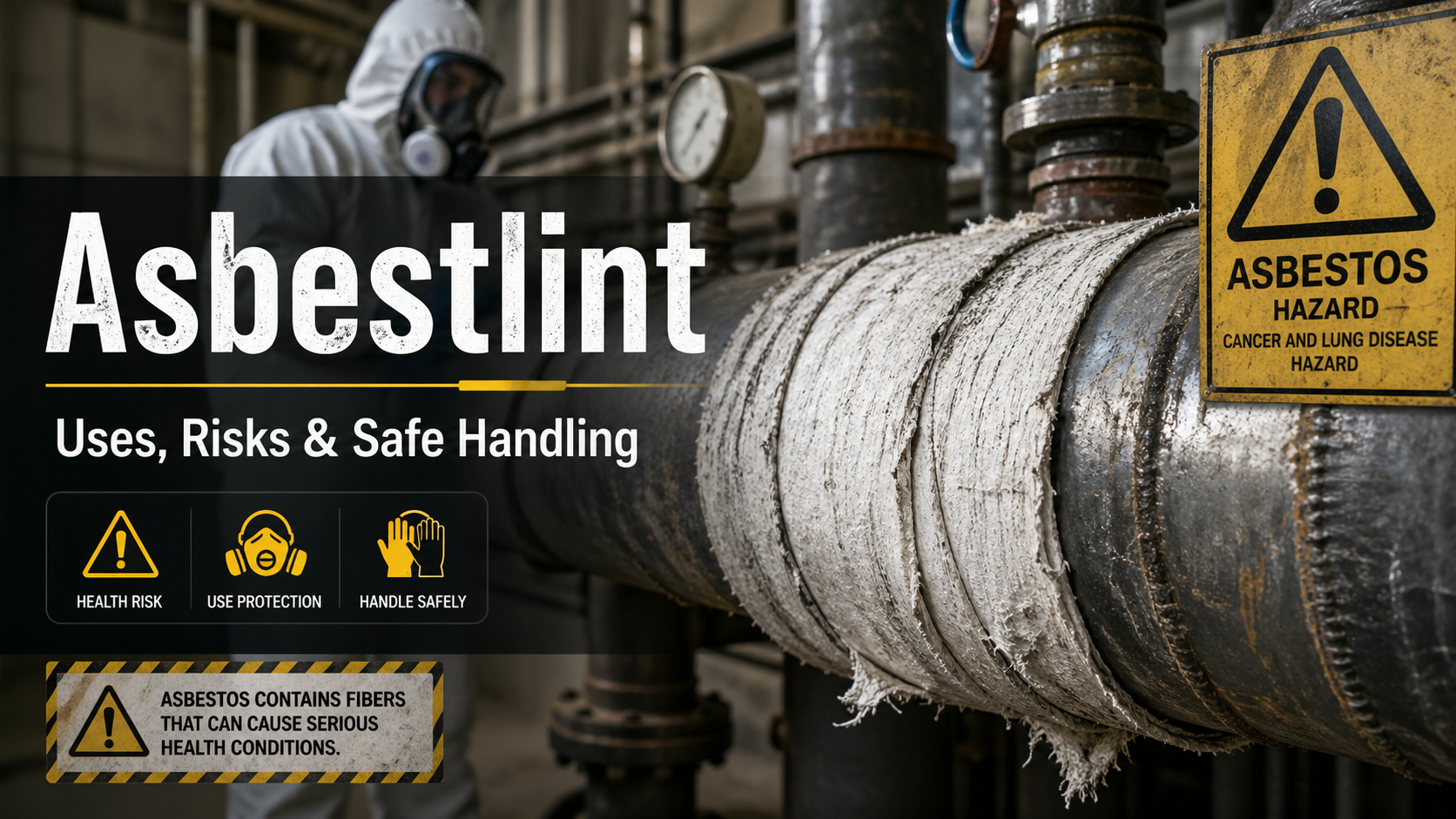
Asbestlint is a word many people search for when they find old heat-resistant tape, fabric strips, or insulation around pipes, boilers, stoves, or industrial equipment. The word is mostly linked to Dutch usage: “asbest” means asbestos, and “lint” means tape, ribbon, or strip. So, in simple words, asbestlint means asbestos tape or asbestos strip.
It may look harmless. Just an old woven band, grey-white material, or dusty wrap around metal parts. But the problem is serious. Asbestos can release tiny fibres when damaged, cut, rubbed, removed, or disturbed. These fibres are dangerous when breathed in, and official health bodies warn that asbestos exposure can cause severe lung diseases.
What Is Asbestlint?
Asbestlint is a type of asbestos-containing tape or woven strip. In the past, it was used because asbestos could resist heat, fire, and chemical damage. That made it useful in places where normal fabric, rubber, or plastic would burn or melt.
You might find old asbestlint in:
- Heating systems
- Boilers
- Pipes and ducts
- Stoves or fireplaces
- Industrial machines
- Old electrical equipment
- Gaskets and sealing areas
- Fireproof wrapping
Asbestos was used in many building and insulation products, including pipe and boiler insulation, because of its heat-resistant properties.
And that’s exactly why asbestlint can still appear in old buildings, workshops, factories, and renovation sites.
Why Was Asbestlint Used Before?
Years ago, asbestos was seen as a strong and useful material. People used it before they fully understood the health risks. It was cheap, flexible, and very good at handling heat.
Asbestlint was commonly used because it was:
- Heat resistant
- Fire resistant
- Flexible enough to wrap around pipes
- Strong under rough conditions
- Useful for sealing small gaps
- Long-lasting
- Suitable for industrial work
For example, a worker might wrap asbestlint around a hot pipe to reduce heat loss. Or it might be used near a stove door as a sealing strip. In factories, it could be used around machinery parts that reached high temperatures.
At that time, it made sense. But now we know better.
Why Is Asbestlint Dangerous?
Asbestlint becomes dangerous when its fibres are released into the air. If the tape is old, dry, cracked, torn, dusty, or broken, it can release microscopic asbestos fibres. You usually can’t see these fibres. That’s the scary part.
If someone breathes them in, the fibres can stay inside the lungs for years. Health problems may not appear quickly. Sometimes they take decades.
Asbestos exposure is linked with:
- Asbestosis
- Lung cancer
- Mesothelioma
- Pleural disease
- Long-term breathing problems
The UK government explains that intact asbestos-containing products may pose very little risk, but damaged materials can release fibres. The UK Health and Safety Executive also warns that disturbing or damaging asbestos can release harmful fibres into the air.
So, the danger is not always “just because it exists.” The bigger danger starts when someone touches it, cuts it, scrapes it, pulls it, sands it, or removes it without proper control.
Where Can You Find Asbestlint?
Asbestlint is usually found in older places. Especially buildings or equipment made before asbestos bans became common.
Here’s a quick table to make it easier:
| Possible Location | How Asbestlint May Appear | Risk Level |
|---|---|---|
| Old boiler rooms | Wrapped around pipes or joints | High if damaged |
| Fireplaces or stoves | Used as sealing tape near heat areas | Medium to high |
| Industrial machines | Woven strip around hot parts | High during repair |
| Old electrical systems | Heat-resistant insulation strip | Medium |
| Workshops and factories | Stored rolls of old tape | High if dusty |
| Heating ducts | Tape-like wrapping or seal | Medium to high |
In the Netherlands, asbestos was banned from use, reuse, storage, sale, import, and processing from 1 July 1993, but older products and buildings can still contain asbestos.
How to Identify Asbestlint
This part is tricky. You cannot safely confirm asbestos just by looking at it. Some asbestos tape looks like normal fabric tape. Some looks like a rough grey or white woven strip. Some is brownish because of dust, heat, or age.
Common signs may include:
- Old woven tape around pipes
- Grey, white, or dirty beige strip material
- Brittle or dusty surface
- Use near heat or fire
- Found in buildings made before asbestos bans
- Old labels mentioning “asbestos,” “asbest,” or heat-proof material
But again, appearance is not proof.
The safest way is to get the material tested by a qualified asbestos surveyor or laboratory. Official guidance from the Netherlands says the first step is to find out whether the material actually contains asbestos.
What Should You Do If You Find Asbestlint?
Do not panic. But don’t touch it either.
If you find something that may be asbestlint, follow these simple steps:
- Stop work in that area
- Do not pull, cut, brush, or tear the material
- Keep people away from it
- Avoid sweeping or vacuuming dust
- Take a photo from a safe distance if needed
- Contact an asbestos professional
- Follow local rules for testing and removal
But please don’t try to remove it yourself. In many places, asbestos removal must be done by trained or certified workers. Dutch official guidance also says asbestos is generally removed by certified removal companies because it is dangerous to health.
What Not to Do With Asbestlint
This is important. Really important.
Never do these things:
- Do not sand it
- Do not drill through it
- Do not cut it with a blade
- Do not use a grinder
- Do not clean it with compressed air
- Do not use a high-pressure washer
- Do not throw it into normal trash
- Do not burn it
- Do not shake dusty material
Belgian workplace guidance says asbestos-containing materials should not be processed, cut, cleaned, or treated with high-speed mechanical tools, pressure washers, compressors, or dry blasting methods because dust production must be avoided.
And honestly, this is where many people make mistakes. They think, “It’s just a small strip.” Then they pull it off. Dust comes out. That small job becomes a serious exposure risk.
Can Asbestlint Be Left in Place?
Sometimes, yes. If asbestlint is in good condition, sealed, not damaged, and not likely to be touched, professionals may decide it can stay in place under proper management. This depends on local law and the condition of the material.
But if it is damaged, loose, dusty, or in an area where renovation work is planned, it should be assessed properly.
The safest rule is simple:
If you are not trained, don’t disturb it.
A professional can inspect it and decide whether it needs removal, sealing, or monitoring.
Safe Removal: Who Should Handle It?
Asbestlint removal should be handled by trained asbestos workers or a certified asbestos removal company. Removal is not just “take it off and bag it.” It may require controlled work areas, protective equipment, special waste bags, warning signs, air control, and legal disposal.
The Dutch Labour Inspectorate notes that asbestos removal work may require a work plan, isolation of the work area, warning signs, and steps to prevent the spread of asbestos dust.
That’s why DIY removal is risky. You may save a little money at first, but the health and legal risks can be much bigger later.
Asbestlint and Home Renovation
Home renovation is one of the main times people discover asbestlint. Maybe you are replacing an old boiler. Maybe you are opening a wall. Maybe you are cleaning a shed or fixing a stove.
And there it is — old tape wrapped around a pipe.
Before starting work in older buildings, it is smart to check for possible asbestos-containing materials. This is especially true if the property was built or renovated before asbestos bans.
Look carefully before you:
- Remove old heating systems
- Replace pipes
- Break walls or ceilings
- Clean old machine rooms
- Remove stove seals
- Open old insulation layers
A small check before work starts can prevent a big problem later.
Final Thoughts on Asbestlint
Asbestlint may sound like a small, specific material, but it carries a serious safety message. It was once used because it handled heat very well. Now, it is treated with caution because asbestos fibres can harm the lungs when released into the air.
So if you find old tape, woven strips, or heat-resistant wrapping that may be asbestlint, don’t guess. Don’t touch it. Don’t remove it yourself.
Get it checked. Get proper advice. And if removal is needed, let trained professionals handle it.
That’s the safest path — for your home, your workplace, and your health.