 By Admin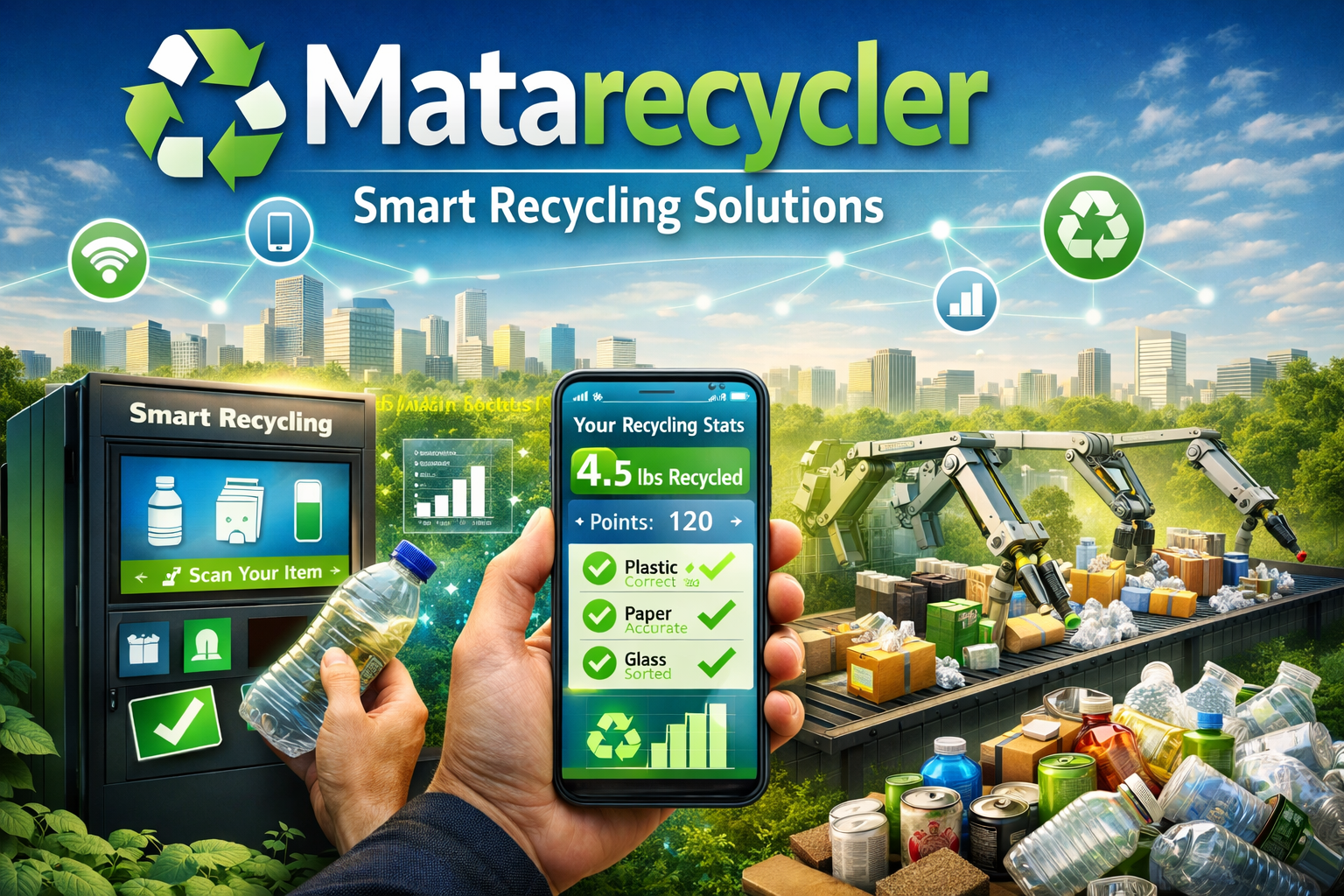
Recycling sounds simple. Put the right thing in the right bin, done. But real life isn’t that tidy… and that’s exactly why the idea of matarecycler is getting attention online. Recent web sources describe matarecycler as a smart recycling approach that connects people, waste systems, and digital tools so recycling becomes less confusing and more effective. Instead of guessing what goes where, the system is meant to guide users, track activity, and improve sorting.
In plain words, matarecycler is being presented as a modern recycling assistant. Not just a bin. Not just a reminder app. More like a blend of technology, local waste management, and better user guidance. And honestly, that idea makes sense. Recycling often fails because people are unsure, labels are unclear, and contamination ruins materials that could have been recovered. EPA-backed examples of smart recycling tools show that on-site technology can reduce that confusion and even teach people why an item belongs in landfill instead of recycling.
Here’s the simple version of what matarecycler usually means online:
- a smart recycling platform or system
- digital tracking for waste or recycling habits
- clearer sorting instructions for households or communities
- less contamination in recycling streams
- better data for cities, buildings, or waste teams
The quick comparison below sums it up:
| Feature | Traditional Recycling | Matarecycler Idea |
|---|---|---|
| User guidance | Often limited to stickers or local rules | Digital prompts, reminders, or smart instructions |
| Sorting accuracy | Depends heavily on human guesswork | Aims to improve sorting with better data or smart tools |
| Feedback | Usually none | Can show users what was sorted right or wrong |
| Waste tracking | Hard to measure at household level | Designed around tracking and visibility |
| Education | Mostly passive | More interactive and habit-building |
This comparison reflects how recent explainers describe matarecycler and how smart recycling tools are discussed by EPA and the World Economic Forum.
So, why does this matter? Because the waste problem is huge. UNEP says the world generates between 2.1 and 2.3 billion tonnes of municipal solid waste every year. OECD also reports that plastic waste has more than doubled since 2000, and after losses in the recycling process, only 9% of plastic waste was ultimately recycled globally in 2019. That’s a hard number to ignore. It tells us something basic: the old way isn’t enough on its own.
This is where the matarecycler idea starts to feel useful. It fits the bigger shift toward a circular economy—a system where materials stay in use longer instead of moving in one direction from purchase to bin to landfill. The World Economic Forum argues that AI and digital connectivity can act like the “nervous system” of a circular economy by linking product design, material data, recovery, and recycling decisions. That sounds technical, sure. But the core idea is simple: better information leads to better recycling.
A few reasons people may find the matarecycler concept appealing:
- it makes recycling easier for ordinary users
- it can reduce contamination from wrong items
- it creates accountability through tracking
- it supports smarter local waste planning
- it turns recycling from a chore into a guided process
And there’s another angle people forget. Education. Smart systems don’t just sort waste — they also shape behavior. EPA’s example of AI-enabled recycling technology shows that when people get immediate feedback, they’re more likely to remember the right action next time. That’s small on the surface, but powerful over time. Habits build cities. Habits build cleaner waste streams too.
Of course, matarecycler isn’t magic. Any smart recycling model still depends on local infrastructure, public participation, and clear collection systems. If a city or town doesn’t have proper downstream processing, even smart sorting won’t fix everything. And if users don’t engage, the data becomes less useful. So yes, tech helps… but it still needs real-world support. UNEP’s guidance on waste makes that clear: solving the waste crisis takes systems, commitment, and investment, not one gadget alone.
At its heart, matarecycler represents a fresh way of thinking about recycling. Less guessing. More guidance. Less waste. More recovery. Whether it becomes a recognized brand, a digital tool, or just a useful sustainability term, the idea behind it is strong: recycling works better when people, data, and waste systems actually talk to each other. And maybe that’s the point. Not smarter bins alone — smarter habits, smarter cities, smarter choices.